





Cubby houses remain both a happy memory for most of us who grew up in Australia and one of the most popular outdoor play investments for families. It’s also a pretty highly researched piece of play equipment.
From our experience, parents usually have the same very practical questions in mind before purchasing a cubby house, and for good reason. The right cubby house can become a key part of your backyard and a real core memory for your child to reminisce over as they get older.
We’ve gathered the most frequently asked questions and put together some clear answers so you can choose your cubby house with confidence!
Alternatively, you can explore our full range of cubby houses, outdoor playsets and swing sets in our online store too.

What Size Cubby House Do I Need?
How long is a piece of string? This one depends on your child’s age, how long you’d like the equipment to last, and, of course, how much available space is up for grabs in your backyard.
A good guide to follow is:
- For toddlers aged 2 to 3, smaller, lower cubby houses usually work well
- For preschoolers aged 3 to 5, medium-sized cubbies with room for imaginative play are often ideal
- For children over 5, larger elevated cubby houses with extra features can be a great pick
If you’ve got the space, then we always recommend sizing up, as kids grow quickly, and having a cubby that feels spacious now will give you plenty of use for years to come instead of just in the immediate future.
Editor’s Tip: If you are torn between two sizes and your yard can handle it, go slightly larger. Parents rarely regret buying a cubby with a bit more growing room, but they often regret one that gets outgrown too quickly.

How Much Space Should I Leave Around a Cubby House?
You can spend hours obsessing over the right cubby house for your kid, but if the house doesn’t fit your backyard, it’s all pointless. You need to have a little bit of space surrounding the cubby, especially if your cubby house has added extras like swings, slides, or climbing features.
We recommend following these guidelines:
- Leave at least 1 metre on all sides of the cubby for safer movement
- Allow extra room for slides, swings, climbing frames and other add-ons
- Keep enough space for supervision and easy access
Having this buffer zone is a smart way to avoid bumps and collisions as the kids will have enough space to run, play, and move freely in your backyard.
If you are comparing larger backyard play options, our guide to outdoor playsets, cubby houses and swing sets is also worth a read.
What Should I Put Underneath a Cubby House?
There are quite a few different options to suit all kinds of backyards and all levels of budget when it comes to what to put under your cubby house.
Some of the most common options include:
| Surface | What to know |
|---|---|
| 🌿 Grass | You’ve probably already got grass down, making this a brilliant option if you’re on a budget. It’s soft, natural, and adds a little greenery to the space. However, grass can wear down over time in high-traffic areas. Grass isn’t recommended for elevated cubby houses if there is a fall risk. |
| 🪵 Bark or mulch | Falling on both bark and mulch is a pretty soft landing, and they can improve drainage, which is another added bonus. This is a slightly more expensive choice than just grass and will need topping up every now and then, but it looks neat and tidy and is safe for kids to fall on. |
| 🛡️ Rubber mats or tiles | Definitely a fantastic choice for safety, especially if your cubby house has a climbing area or you’ve chosen a raised cubby. This is a very low-maintenance option that lasts for ages, so if it’s within your budget, it’s a worthwhile investment. |
| 🟩 Artificial turf | Not quite as eco-friendly as the real deal, turf is a visually pleasing option that still provides some cushioning. Just be sure to get something that can handle the heat of Australian summers, as some cheaper, lower-quality artificial turf has been known to melt! |
It goes without saying that safety should always be a priority when upgrading your backyard for little ones, so for higher cubbies, slides, or climbing frames, we always suggest a soft-fall surface to keep your kids safe. You can also read our guide to anchoring and securing outdoor play equipment if your setup includes more active features.
For broader playground safety guidance, Kidsafe NSW and Kidsafe SA both offer useful advice on safer backyard play spaces.

Does the Ground Need to Be Level?
Absolutely! This is a very important step that frequently gets overlooked. When you build a cubby house on a level base, you’re ensuring structural stability, proper door and window alignment, and an even weight distribution.
Not only that, but an uneven base can cause smaller houses to tip, which is a huge hazard with little ones around.
You can achieve a nice, level base by:
- Clearing the area of grass and debris
- Using a spirit level to check the ground
- Adding and compacting soil, sand or crusher dust where needed
- Using a more formal levelling solution for complex or sloped yards if required
You should take the time to get this step right, as it really does eliminate any headaches later on!
What Timber Is Used, and How Long Does It Last?
Almost all high-quality cubby houses in Australia are constructed using treated timber, which is designed to handle outdoor conditions.
Here at The Best Backyard, the cubby houses we sell are built using durable, weather-resistant timber, which is perfectly suited to our Australian environments.
With the correct care and maintenance, you can expect from your cubby house:
- Several years of regular use
- A longer lifespan with sealing and maintenance
- Better resistance to everyday weather exposure
We like to choose treated timber because it’s durable yet keeps a more natural look to backyards, which is brilliant for expanding imaginations.
Australia’s UV levels are high year-round, so it is worth understanding how sun exposure affects outdoor materials over time. SunSmart has a clear overview if you want to read more.
Editor’s Tip: Timber is usually the nicer-looking long-term option in a backyard, but it rewards a bit of maintenance. If you are happy to check it over once or twice a year, it can stay looking good for a long time.
Do I Need to Seal or Treat the Timber?
If you’d like your cubby to last longer, it’s worth doing!
Many cubbies are pre-treated however applying a sealant or outdoor timber oil every now and then definitely adds an extra layer of protection.
A few benefits of this little bit of maintenance include:
- Added protection from sun and rain
- Reduced cracking or splitting
- A longer lifespan overall
We suggest applying a seal not long after installation, then reapplying every 12-24 months, depending on the climate your cubby house is exposed to.
What Age Range Do Cubby Houses Suit?
So many parents think cubby houses are only for the littlest kids, but in reality, a good quality cubby house can last for an entire decade!
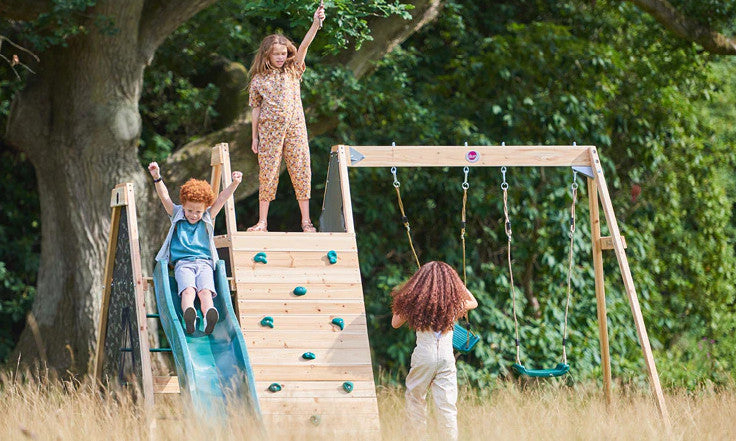
From as young as two years old, most kids start to take an interest in imaginative play, making a cubby house a fun addition to their outdoor play equipment. However, if you purchase a more spacious cubby or add-ons like climbing frames, slides, and swings, your cubby house can last your child until they’re ten or even older.
For the older kids, a cubby house turns into a den, hideout, or clubhouse where they can socialise with friends whilst still enjoying the great outdoors.
This is why we suggest parents go for a slightly larger cubby whenever possible, as it extends the usability of the cubby house by several years.
Outdoor play also supports physical, social and imaginative development, which is one reason these products stay so popular with families. The Raising Children Network has a helpful overview of the benefits of outdoor play if you would like a broader parenting perspective.
Can a Cubby House Stay Outside All Year?
Of course! Cubby houses are made for outdoor use and can remain outside all year round in our Australian conditions.
Exposure to sun, rain, and our ever-changing weather conditions will naturally cause a little wear over time, though, so we recommend maintaining your cubby to keep it in shape for longer.
To keep your cubby looking its best, you should:
- Position it in a partially shaded area where possible
- Make sure there is proper drainage underneath
- Keep it clear of pooling water
If you follow those steps, your cubby house should handle the Australian elements with ease.
How Do I Maintain a Cubby House?
You’d be surprised at how easy it is to maintain a cubby house. Just a little bit of quick maintenance can extend the lifespan of your cubby house for many years.
Every few months, you should:
- Check for loose screws or fittings
- Inspect the timber for cracks or wear
- Clean surfaces and brushing away debris
Then once a year, you should:
- Reapply timber sealant or oil
- Check the ground stability
- Refresh surfaces such as bark or mulch if needed
By completing this little bit of maintenance, not only does your cubby last longer, but the play also remains safe.
Is a Cubby House Worth It?
Definitely! For many Australian families, a cubby house becomes a real extension of the home and is one of the most used features in their backyard.
It’s a fantastic way to encourage:
- Imaginative play
- More outdoor time
- Social interaction
Not only that, but it’s a space that can really feel as though it belongs to your child, making them even more eager to spend time playing in it.
For families building out a fuller play area, it can also be worth browsing our climbing frames and mud kitchens collections for ideas that work alongside a cubby house.
If you are still weighing up options, these guides might help too:
- Why KidzShack Cubby Houses Are a Favourite for Family Backyards
- 6 Must-Have Outdoor Play Centres & Cubby Houses for Creative Kids
Ready to Find the Right Cubby?
Choosing the perfect cubby house for your family is an exciting time that does not need to feel overwhelming. Once you’ve got your head around the practical aspects like size, space, surfaces, and maintenance, it becomes easier than ever to find the right cubby for your family’s backyard.
Browse our full range of cubby houses and see which one feels right for your space. If you have any questions, email us at hello@thebestbackyard.com.au and one of our team will be happy to help.
Frequently Asked Questions
A few extra questions parents often ask when choosing the right cubby house for their backyard.
Can cubby houses be personalised or decorated?
Yes, many cubbies can be personalised with paint, stickers or added accessories such as flower boxes, curtains or flags. Some models also include features that make customising the space even easier, helping children make it feel like their own.
Do cubby houses provide protection from the elements?
Cubby houses provide basic protection from sun and light rain, but they are not usually fully weatherproof. Many timber cubbies are pre-treated, and adding an extra sealant can help protect the wood further. Positioning the cubby in a partially sheltered area can also help extend its life.
Are these suitable for small gardens?
Yes, cubby houses come in a range of sizes, so there are options for both smaller and larger backyards. Compact models suit tighter spaces well, while larger cubbies may need extra room for slides, swings or verandas. It is always worth measuring carefully before you buy.
Can a cubby house be moved after it’s assembled?
That depends on the model. Smaller plastic cubbies can be easier to move, while larger timber cubby houses are usually heavier and harder to relocate once assembled. If you think you may need to move it later, it is worth keeping that in mind before choosing.
Do your cubby houses meet Australian standards?
We only stock trusted, high-quality brands designed for safe family use. If you would like help checking the specifications or suitability of a particular model, our team is always happy to help.
Do your cubby houses come pre-assembled?
Most timber cubby houses are delivered flat packed with instructions for assembly. Some plastic models may need less setup, but it is always worth checking the individual product page for the most accurate information.
Do you offer installation services?
Installation may be available in selected areas. Please contact our customer service team for the latest information on availability and pricing.


Leave a comment