

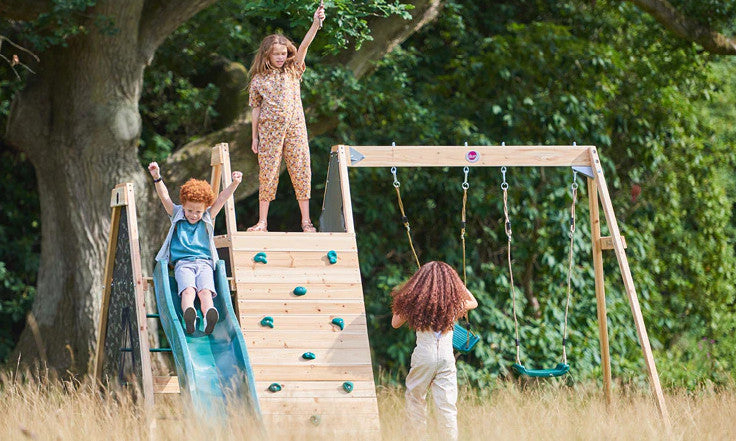
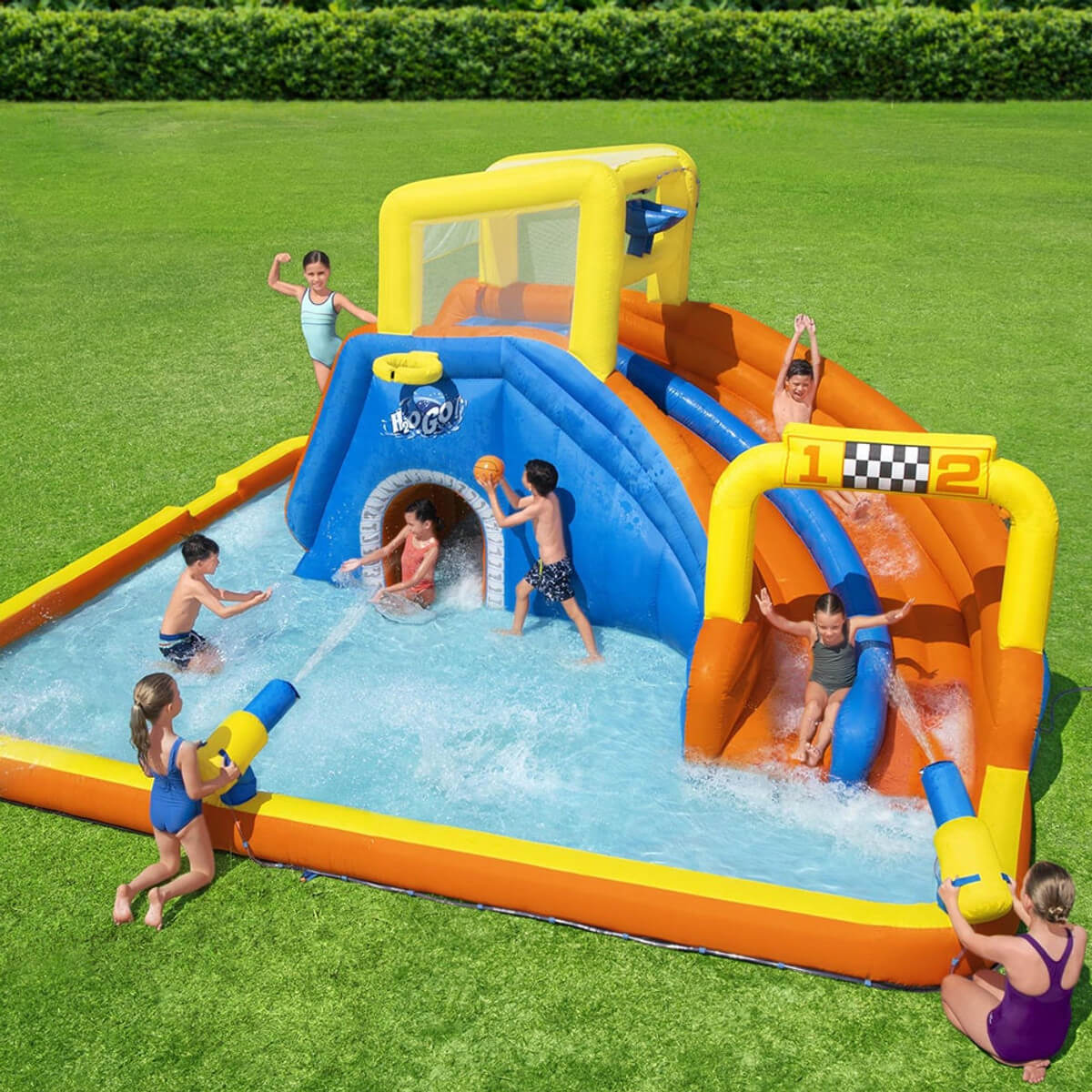
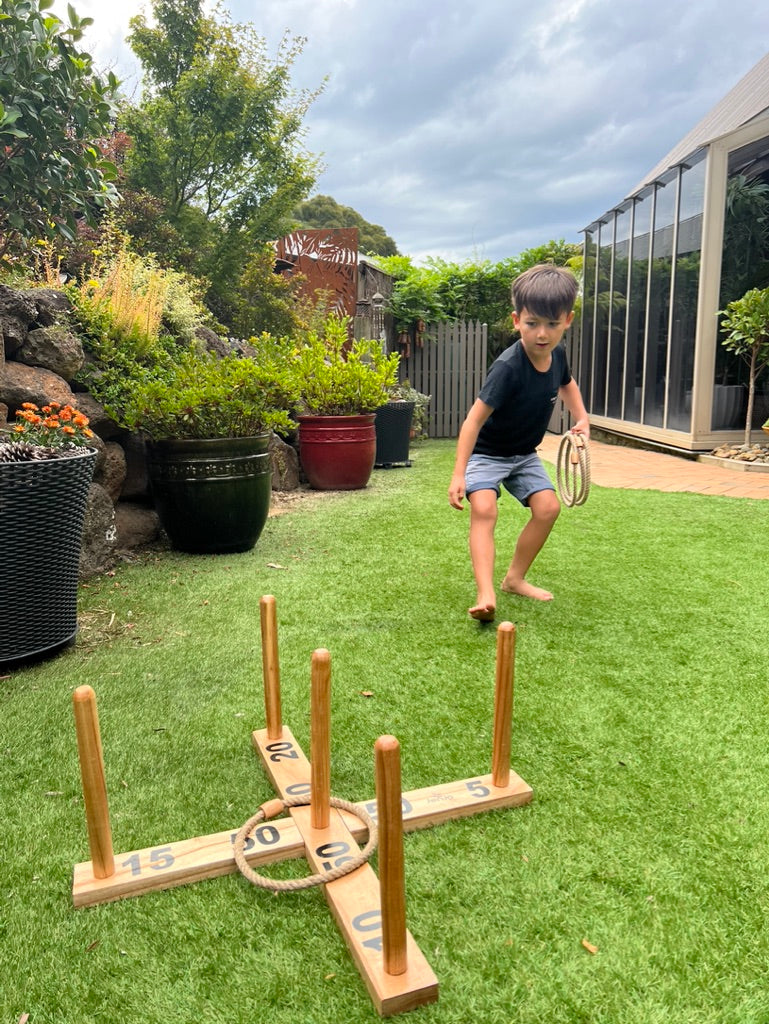


When you’re creating a backyard for you and your kids, you want to build something they actually want to spend time in. Sometimes that doesn’t involve purchasing the biggest or most impressive play equipment. It’s often about choosing the right equipment for where they are developmentally and learning to follow their outdoor interests.
Children grow so quickly, and their styles of play change just as fast. When you have the right setup for your child’s needs in your garden, you’re helping to support their confidence, coordination, creativity, and even independence. When you build the wrong setup, it usually gets ignored, outgrown, or simply underused.
Below is a guide to help walk you through key developmental stages your child may go through and how you can choose the outdoor play equipment that fits your child now, whilst giving you the scope to plan for what comes next.
When you are ready to get started browse our range of outdoor play equipment here or talk to our experienced team if you have any questions.

🧒 Outdoor Play by Age: A Quick Guide
| Age and stage | What works well |
|---|---|
| 👶 Under 2 | Sensory play, low-to-the-ground structures, gentle slides, sand and water play, soft climbing elements |
| 🚼 2 to 3 | Small climbing frames, toddler swings, simple cubbies, slides, mud kitchens and repetitive movement play |
| 🧸 3 to 5 | Cubby houses, climbing frames, higher slides, sand and water play, social and imaginative setups |
| 🛝 5 to 8 | Larger playsets, elevated cubbies, monkey bars, rope features, water play and more adventurous movement equipment |
| 🏃 8 to 12 | More challenging climbing structures, swing sets, obstacle-style play, sports gear and open-ended social play spaces |
👶 Babies and Young Toddlers (Under 2): Sensory Exploration with Safety in Mind
Anyone who spends time with under-2s knows their style of play is all about discovery. Babies and young toddlers are constantly learning how their bodies move and how the world responds to them. At the same time, safety is especially important, because children at this stage are still likely to put things in their mouths or try to grab anything within reach.
✨ What they’re developmentally ready for
A few things you’ll start to notice with your little one include:
- Crawling, pulling up and early walking
- Sensory exploration through textures, movement and sounds
- Cause-and-effect style play
🧩 The equipment you should choose
Some of the most popular pieces of play equipment for this age group are:
- Low-to-the-ground play structures
- Smaller, gentler slides
- Soft climbing elements
- Activity panels and sensory areas
- Sand and water play options
- Sandpits for simple, open-ended outdoor play
To be honest, at this age, the simpler designs allow for plenty of freedom to explore, and by keeping them lower to the ground or made of softer materials, you can allow little ones to roam freely without the risk of injury.
🛡️ Important safety tips
Of course, safety is always a priority when you’re creating outdoor spaces for the youngest members of your family. Our top safety tips for this age group would have to be:
- Keep everything stable and tip-resistant
- Use softer surfaces such as grass or rubber mats where possible
- Avoid heights or tight gaps a child could slip through
The wonderful thing about this age is that less is more. Smaller, thoughtfully chosen pieces will get so much more use than something large and overwhelming. Sometimes, the best accessory to a gentle slide is simply having family members out there playing with them, too.
Editor’s Tip: For under-2s, the best play areas are often the least fussy. A smaller setup with one or two good features usually gets much more use than a giant structure that feels too advanced.

🚼 Toddlers (2 to 3): Movement, Confidence and Independence
Now you’re entering the chaotic years where abilities and developmental stages can vary tremendously. Toddlers are so full of energy and endless curiosity that finding play equipment where they can safely test their limits can feel a little challenging.
✨ What they’re developmentally ready for
This age group can be tricky, as toddlers develop so quickly and have such varied interests that you should always follow your child’s lead. However, most children in this age group are ready to enjoy activities like:
- Climbing short heights
- Sliding by themselves
- Basic imaginative play
- Repetitive play
🧩 The equipment you should choose
Again, follow your child’s interest with this one. Some of them love a swing, whilst others prefer to climb. Of course, we do have some play equipment that is endlessly popular amongst the toddlers of Australia, so we do suggest you look into pieces like:
- Smaller climbing frames
- Slides and low platforms
- Toddler-friendly swing sets with supportive seats
- Simple cubby houses
- Outdoor mud kitchens
We are lucky to have a large range of options that suit toddlers at different stages of outdoor exploration.
🛡️ Important safety tips
For some children within this category, turning two leads to a massive confidence boost that they’re now one of the “big kids.” This can come with some new safety considerations to help keep them safe as they push the boundaries of play. A few things we like to suggest to parents of 2-3 year olds would be:
- Plenty of guardrails and enclosed platforms
- Clear sightlines so you can keep an eye on them
- Smooth edges and durable finishes
At this age, you can introduce a little variety whilst keeping things scaled to their size. Kids love having equipment and tools that are made for their size, so avoiding anything too advanced can keep them feeling confident whilst they explore.
🧸 Preschoolers (3 to 5): Imagination Takes Over
Your toddler is now a proper little person with an imagination as big as the entire universe. Preschoolers combine the fun of physical activity with some pretty in-depth imaginative storytelling. The play equipment you choose should be something versatile that can be a castle one minute and a pirate ship the next!
✨ What they’re developmentally ready for
Again, this age group can have quite a few variations within it. However, we do find most of the kids within the preschool category are ready for:
- More confident climbing and balancing
- Role play and pretend scenarios
- Social play with siblings and friends
- Opportunities to build coordination and strength
🧩 The equipment you should choose
Preschoolers thrive when given equipment as versatile as they are. They love plenty of chances to involve friends and family members in their games or even give important roles to their favourite toys. Some of the most popular pieces for this age group are:
- Cubby houses that can become shops, castles, homes or pirate hideouts
- Climbing frames with multiple elements
- Slightly higher, more challenging slides
- Sand and water play setups
- Our wider range of KidzShack cubby houses and timber cubbies for flexible pretend play
It’s a really smart choice to find multi-functional equipment with something they can climb, hide in, and invent new games around!
🛡️ Important safety tips
Preschoolers will start to understand basic safety precautions whilst still exploring their adventurous side. To keep your preschooler safe, consider the following safety tips:
- Make sure platforms have proper barriers
- Check weight limits as children grow
- Leave enough space between pieces of equipment for easier movement
You’ll notice your preschooler thrives when given the choice of how they play with equipment. When you build a flexible setup, you’ll be able to spend hours outside with your little one!

🛝 School Age (5 to 8): Skill-Building and Adventure
Arguably one of the trickiest age groups to keep outdoors, the school-age kids want something challenging and not just passive play. If you want to keep your little ones outdoors and as screen-free as possible, you need to choose play equipment that allows them to seek adventure safely.
✨ What they’re developmentally ready for
You’d be amazed at what this age group can accomplish. They’re getting stronger and developing mental resilience to help them conquer even the trickiest play equipment. Most school-age kids love outdoor play equipment like:
- Higher, more complex climbing structures
- Chances to test strength and coordination
- Outdoor games with simple rules
- More independent play with less supervision
🧩 The equipment you should choose
If you want to keep your school-age children enjoying the great outdoors, some key pieces of play equipment worth investing in would be:
- Larger playgrounds and playsets
- Elevated cubby houses with slides, swings and climbing features
- Water parks and water play
- Monkey bars or rope elements
- Swing sets with more dynamic movement features
- Obstacle-course style setups
- The Warrigal Cubby House
- The Darlington Play Centre
- The Plum Lookout Tower
You can explore our larger, more challenging options for outdoor play here.
🛡️ Important safety tips
This age is tricky to keep safe, as falls will often happen faster and from a greater height. A few ways to keep your over fives safe are by having:
- Strong anchors in the ground
- Fall zones that are clear and cushioned
- Regular maintenance checks
It’s at this age that kids often benefit from being pushed slightly out of their comfort zone whilst remaining safe. Keeping an eye on the condition of play equipment is ever so important to keep your kids safe.
For more on safer installation and surfacing, see our guide to anchoring and securing outdoor play equipment.
🏃 Older Kids (8 to 12): Strength, Social Play and Longevity
So many kids in this age group spend their free time in front of a computer, phone, or tablet, but the reality is, older kids still want to play; it just looks a little different. You need to choose outdoor play equipment built for physical challenges, social games, and just spaces that feel a little more “grown up.”
✨ What they’re developmentally ready for
This is where outdoor play equipment goes in a few different directions. You can choose both physical and mental challenges to keep this age group engaged. Choose things like:
- Strength-based activities
- Competitive and group play
- Longer, more sustained play sessions
- Opportunities to take ownership of their outdoor space
🧩 The equipment you should choose
Keep your options open and even involve your child in the selection of new outdoor play equipment, allowing them to build a space they actually want to spend time in. Some of the favourites amongst this age group include:
- Larger swing sets
- Climbing structures with more height and complexity
- Open spaces for sports and games
- Sports-based equipment such as basketball hoops or obstacle-style play
🛡️ Important safety tips
With older children, you need to keep a close eye on play equipment to make sure it remains in the best shape possible. Make sure that you:
- Choose equipment that can handle greater weight and force
- Check for wear and tear regularly
- Leave enough room for active movement
Now that you’re firmly into the stage where outdoor play is in direct competition with screens, you need to make the space as engaging as possible to keep kids outdoors.
Editor’s Tip: For older children, challenge matters. If the equipment feels too babyish, they will lose interest quickly. A slightly more adventurous setup often keeps them using the backyard much longer.
📏 Buying for Now vs Buying to Grow Into
We have this conversation with parents pretty much every day: Should I buy for my child’s current age, or buy something they’ll grow into?
The answer is actually a little bit of both!
You should buy options for them to enjoy now if:
- Your child is under 3
- Safety or confidence is a big concern
- You want immediate, everyday use
On the other hand, you should buy to grow into it if:
- The equipment has adjustable or flexible features
- There are multiple children of different ages using it
- You are investing in a longer-term backyard play solution
A sensible rule of thumb to follow is that you should choose something your child can use today, but that still offers a little bit of growing room for the future.
🧱 Creating a Play Space That Evolves Over Time
You don’t want to be replacing your outdoor play equipment every summer. You need to start thinking about your backyard in layers.
You’ll need to begin with a core piece of equipment that allows you to add to it as your child grows. Something where you can:
- Add swings or climbing elements later
- Introduce more imaginative play features as interests develop
- Keep open space available for games as children get older
When you follow this strategy, it allows you to save money but also create a backyard that grows with your family over time.
🌞 Supporting Play That Matters
So many kids aren’t getting enough outdoor play in their lives at the moment. Outdoor play helps to support your child’s physical health, build their confidence, encourage their creativity, and allows your child to connect with the world they live in.
Organisations such as the Raising Children Network and Kidsafe NSW offer useful guidance on why active outdoor play and safer play spaces matter. Children’s play and movement needs also change quite quickly across the early years, which is why age-appropriate choices tend to work best.
When you choose the right play equipment at the right stage of their development, it can be the gentle support they need to learn to love the great outdoors.
Build a backyard that matches your child’s abilities and interests, and outdoor play often becomes much more natural. You can explore our full range and find the right fit for your family here.
If you would like help narrowing down the options, email us at hello@thebestbackyard.com.au and one of our team will be happy to help.
Frequently Asked Questions
A few extra questions parents often ask when choosing outdoor play equipment for different ages and stages.
What type of outdoor play equipment is best for toddlers?
For toddlers, lower-to-the-ground equipment is usually the best place to start. Simple slides, small climbing frames, toddler swings, sandpits and mud kitchens are often the most suitable choices because they allow children to build confidence without feeling overwhelmed.
Should I buy play equipment for my child’s current age or something they can grow into?
Usually, the best choice is a bit of both. It makes sense to choose something your child can use safely and confidently now, while also leaving a little room for them to grow into it over time, especially if the equipment has flexible or multi-use features.
How much space should I leave around outdoor play equipment?
It is important to leave enough room around play equipment for safe movement, supervision and any added features such as swings or slides. Larger and more active setups will need a bigger clearance area, particularly around fall zones and swing arcs.
What safety surface should I put underneath outdoor play equipment?
That depends on the type and height of the equipment. For lower-level play, grass may be enough in some cases, while raised cubbies, climbing frames and more adventurous setups usually benefit from a softer surface such as mulch, bark or rubber-style soft fall.
At what age do children usually start enjoying cubby houses?
Many children start enjoying cubby houses from around age two, especially once imaginative play begins to develop. Younger children may use them more simply at first, while older children often turn them into shops, clubhouses, pirate ships or hideouts.
How do I keep older children interested in outdoor play?
Older children are more likely to stay engaged when the equipment offers challenge, movement and a sense of independence. Larger playsets, climbing structures, sports-based play and obstacle-style activities often work better for this age group than simpler equipment aimed at younger children.
How often should outdoor play equipment be checked or maintained?
It is a good idea to check play equipment regularly throughout the year. Look over screws, fittings, anchors, timber condition and surfaces, especially after heavy rain, hot weather or periods of frequent use. A little routine maintenance can make a big difference to both safety and longevity.
Can one backyard play setup work for children of different ages?
Yes, in many cases it can. A well-planned setup often starts with one core piece and then adds different features over time. This can work especially well for families with siblings of different ages, as long as the equipment is chosen with safety, supervision and age-appropriate use in mind.


Leave a comment